


A large part of Giresun has been designated as a mining area, with more than 12,000 hectares transferred to private companies. The process is expected to affect not only the environment but also the economy based on hazelnut production.
Around 85% of Giresun has been opened up for mining, with over 12,000 hectares handed over to companies.
Recent mining tenders and licensing processes in Giresun have brought about a transformation covering most of the province. According to a statement by the Giresun Environmental Association titled “Urgent Call to the People of Giresun,” approximately 85% of the province has been declared a mining zone, and more than 12,512 hectares across different districts have been opened for mining activities.
With nearly the entire province being opened to mining, the consequences are expected to go beyond environmental damage. The region’s economic structure and way of life are also likely to be affected.
Hazelnut production forms the backbone of Giresun’s economy. At least 64% of agricultural land is used for hazelnut cultivation, and around 100,000 people rely on it for their livelihood. According to 2025 data, the province’s exports reached 1.03 billion dollars, with the majority of this revenue coming from hazelnuts.
The expansion of mining activities raises concerns about the degradation of agricultural land, pollution of water resources, and losses in both yield and quality of production. These impacts could lead to a direct economic disruption.
The licensed areas are not limited to uninhabited land. Villages, highlands, pastures, and water basins are also included within these zones.
Across districts such as central Giresun, Piraziz, Dereli, Bulancak, and Şebinkarahisar, areas covering a total of 38 villages and highlands have been transferred to companies. Some sites exceed 2,000 hectares, indicating that the intervention will affect a wide geographical area.
Mining sites have been awarded to companies including Lidya Mining, Gümüştaş Mining, Gençer Mining, Kar Mineral Mining, and MirYıldız Mining. A significant portion of these areas overlaps with agricultural land and drinking water resources.
Most of the projects fall under Group IV mining activities.
These include the extraction of gold, silver, and polymetallic ores through excavation, blasting, and chemical processing methods. Such processes are known to carry serious risks, including the contamination of water with heavy metals and the degradation of soil structure.
Giresun’s geography, characterized by heavy rainfall and a high risk of landslides, further increases these risks. In the event of a leak or waste overflow, pollutants could spread rapidly along riverbeds, affecting entire watersheds.
A significant number of mining sites are located in high-altitude highlands and at the sources of water systems. This creates the risk of impacts extending beyond specific areas to broader agricultural zones downstream. In addition to hazelnut orchards, activities such as beekeeping, livestock farming, and nature-based tourism may also be affected.
A decline in hazelnut quality could weaken Türkiye’s position in international markets. This may lead to reduced export revenues and lower incomes for producers. For a province like Giresun, whose economy largely depends on a single product, this represents a systemic risk.
In its statement, the Giresun Environmental Association said that the current practices do not provide long-term benefits for the region and instead result in the transfer of local resources to large-scale companies. Developments in Giresun are being seen not only as an environmental issue but as a comprehensive transformation affecting the production model, rural life, and the economic structure.
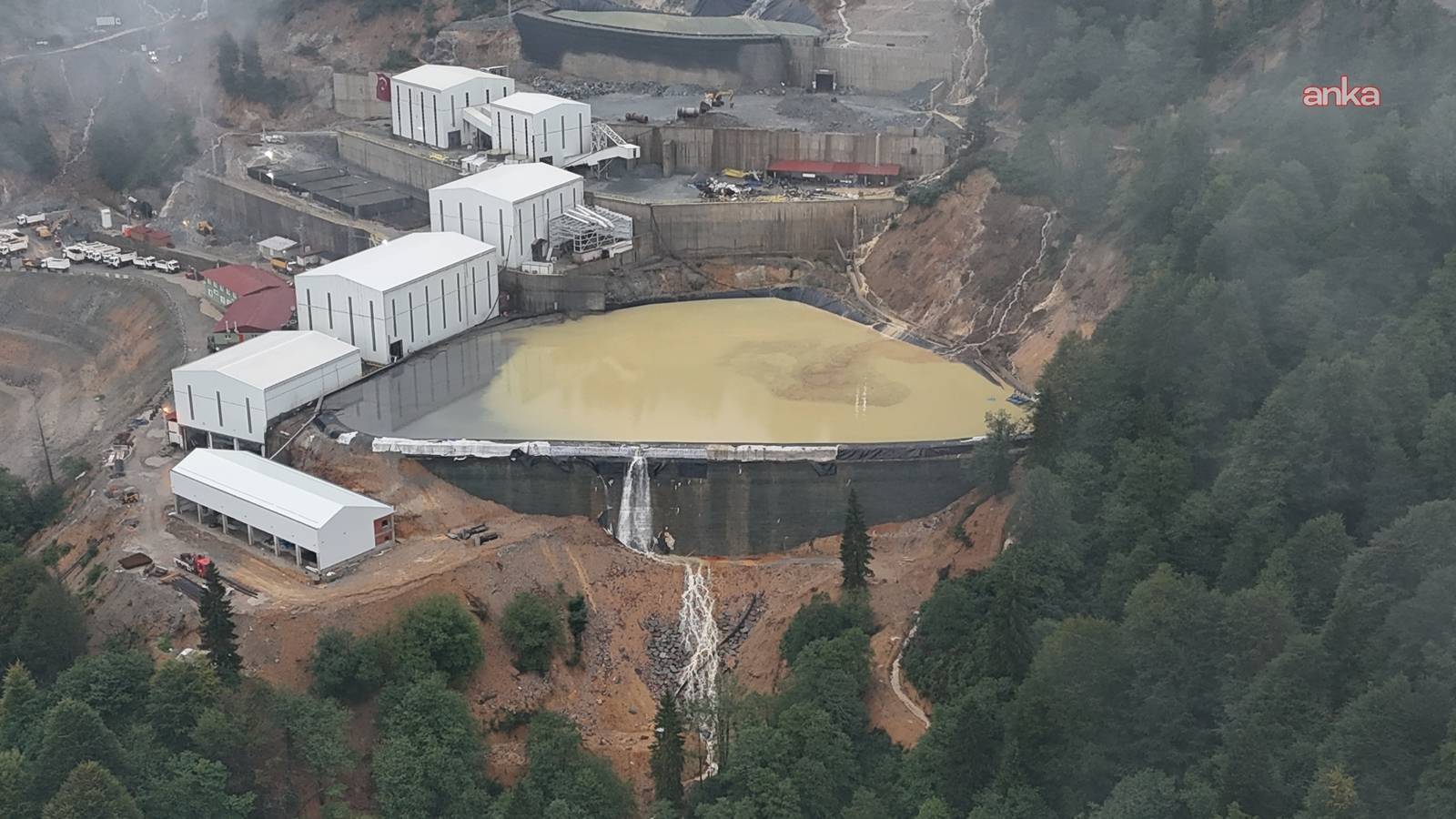
Note: The news image shows the waste pond at a mining site operated by Alagöz Mining in Çatalağaç village, Doğankent district of Giresun. During heavy rainfall last year, the waste pond reportedly overflowed, with tons of contaminated water allegedly spilling into nearby streams and soil.